
There’s been a lot written about the return-to-office debate. Whether people should come back, how many days, what the right hybrid model looks like. Most of it misses the more important question.
Not: how do we get people back to the office?
But: is the office actually worth coming back to?
Because the answer to the first question depends almost entirely on the answer to the second. And in our experience — fitting out offices across London and beyond for clients of all sizes and sectors — the workplaces people actively choose to be in aren’t always the most expensive or the most architecturally striking. They’re the most considered.
Here’s what they consistently have in common.
The workplaces people genuinely want to be in aren’t the most expensive. They’re the most considered.
1. A genuine variety of spaces
Open plan has become the default setting for office design — and for good reason. It encourages visibility, informal collaboration, and a sense of shared energy that private offices and cellular layouts can’t replicate.
But open plan alone doesn’t work. And the offices that suffer most from post-occupancy complaints are almost always the ones that treated open plan as the destination rather than one component of a broader spatial strategy.
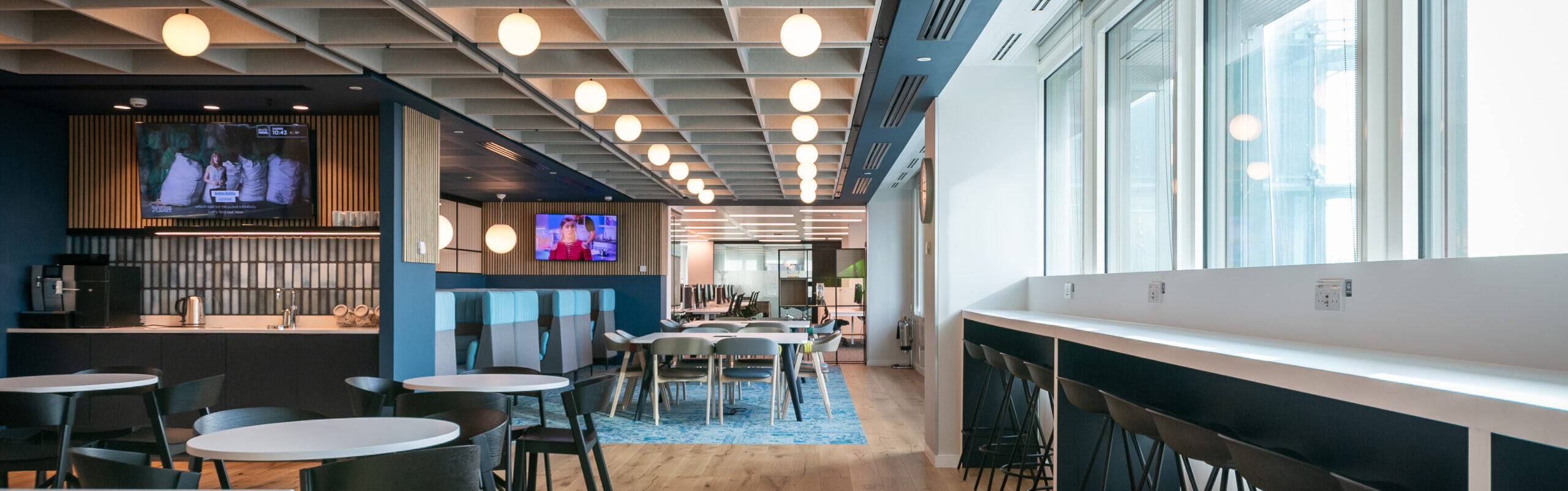
The offices people want to be in offer variety: heads-down focus zones where conversation is implicitly discouraged, informal breakout areas that sit between ‘at my desk’ and ‘in a meeting room’, small group spaces for two or three people to work through something quickly, and social spaces that feel genuinely different from the working ones.
The principle isn’t complicated: different work requires different environments, and the space should reflect that.
2. Acoustic design that gives people control
This is the quality that’s most consistently absent from offices that look good but don’t perform. We hear it constantly from facilities managers who’ve moved into a brand new fitout: “it’s beautiful, but it’s so loud.”
Acoustic discomfort is one of the primary drivers of workplace dissatisfaction, and it’s one of the most preventable. The problem is almost always that acoustic design is treated as an afterthought — something to address if the budget allows, rather than a fundamental specification decision.
What good acoustic design actually achieves is control. Not silence — which most people don’t want and which kills the energy of a space — but the ability to find the right acoustic environment for the task at hand. A room that absorbs sound when you need to concentrate. A space that allows conversation without broadcasting it to the floor.
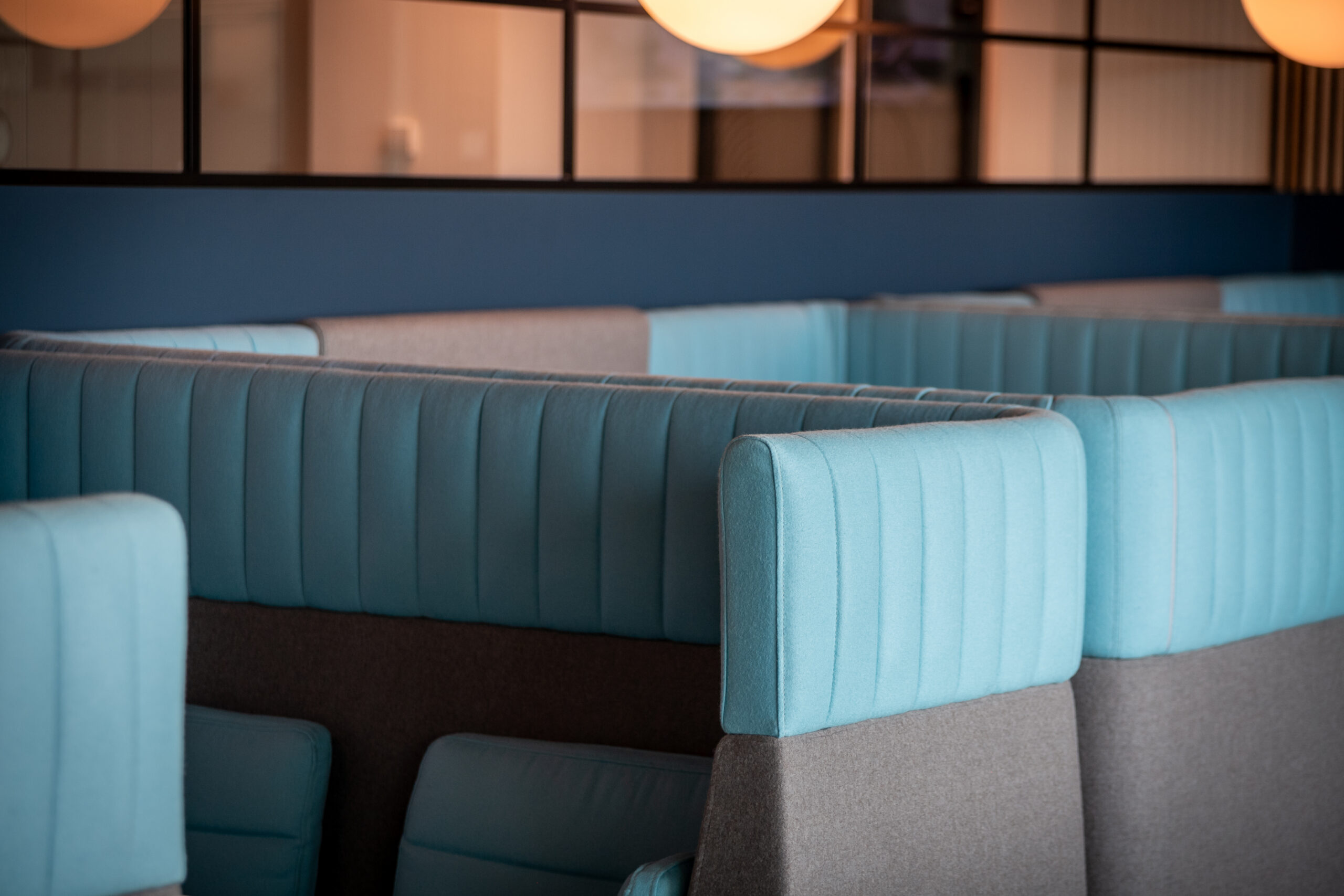
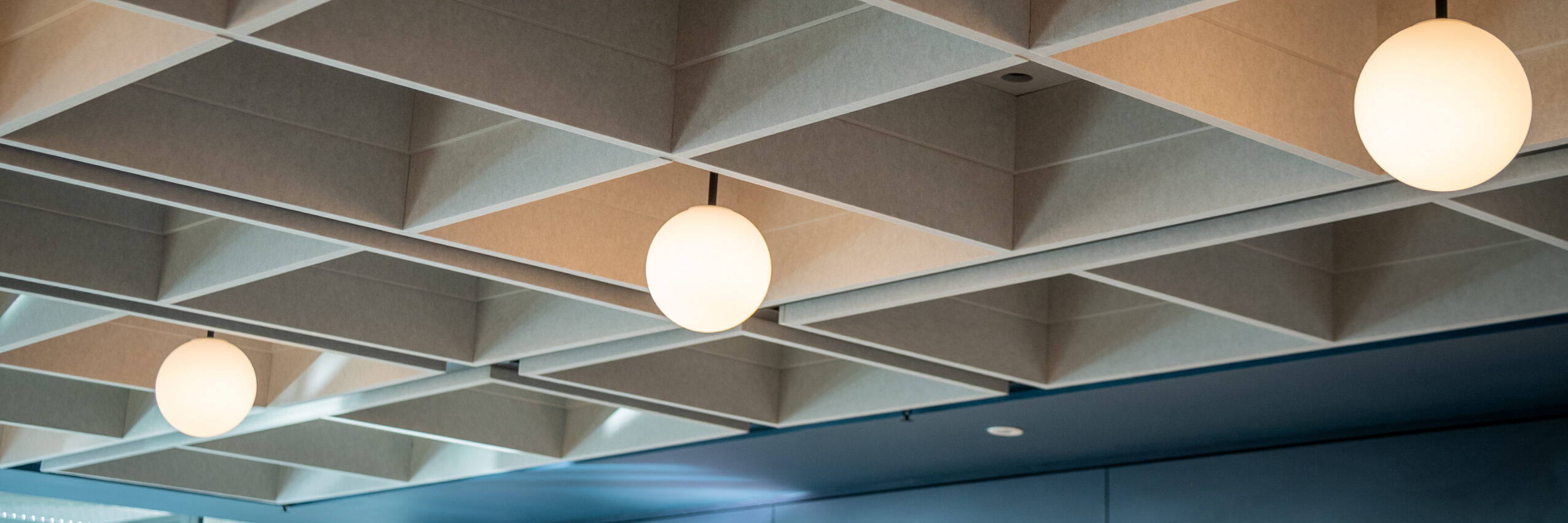
The tools for achieving this — ceiling baffles, fabric-wrapped panels, high-backed booth seating, strategic soft furnishings — are design elements, not compromises. The best-sounding offices we’ve delivered are also some of the best-looking ones.
3. Natural light and a genuine connection to the outdoors
This one isn’t contested. The evidence on natural light and human performance is extensive and consistent: access to daylight improves mood, concentration, and sleep quality. People in daylit environments report higher levels of wellbeing and satisfaction than those in artificially lit ones.
Yet many offices treat natural light as a peripheral consideration — something determined by the building’s existing windows rather than something worth designing around.
In practice, designing around daylight means thinking carefully about where different functions are placed relative to the building’s façade. Focus work near windows. Social spaces in the centre. And where natural light is limited, investing in lighting design that responds to the time of day rather than staying at a fixed intensity regardless of conditions.
Biophilic elements — plants, living walls, natural materials — extend this connection. Not as decoration, but as a deliberate design strategy with measurable outcomes.
4. A finish quality that holds up
There’s a distinction worth making between a fitout that photographs well and one that performs well over time. The two are not always the same thing.
The surfaces that look identical on day one can look very different after three years of daily use. The difference is almost always in the specification — the substrate behind the veneer, the quality of the joinery, the acoustic performance of a partition rather than just its visual weight.
We spend a significant amount of time on this conversation with clients because it’s the one that’s easiest to cut in the value engineering phase and the most regretted in the years that follow. A fitout is not a short-term investment. The specification should reflect that.
The offices that still feel considered and well-maintained after several years of occupation are the ones where this decision was made deliberately, not by default.
5. A layout that reflects how the business actually works
The most common brief we receive contains some version of: more meeting rooms, more desks, better kitchen. Which is fine — these are real needs. But they’re outputs, not inputs.
The more useful starting point is: how do teams actually collaborate here? Where does the informal decision-making happen? What does the flow of a typical working day look like, and where does the current space get in the way of it?
When we ask these questions, the answers often point to a different design solution than the brief initially suggests. The problem isn’t always a shortage of meeting rooms — it’s that the meeting rooms are in the wrong place, or the wrong size, or used for things they weren’t designed for because there’s no better option.
A layout that reflects how a business works rather than how it appears on a floor plan is the difference between a space that functions on day one and one that still functions as the business grows and changes.